Choosing between a new vehicle and a reliable used model is a major financial decision for Washington drivers. As living costs rise from Seattle to the Tri-Cities, every dollar matters.
Many buyers want the latest safety technology. However, they also want to avoid the steep depreciation that comes with a new car.
The 2026 automotive market has also changed. Interest rates and inventory levels now play a larger role in overall value.
This guide explains how to compare pricing, maintenance, and Washington-specific tax factors. It also considers real driving needs. Whether you commute on I-5 or travel through mountain passes, these factors can help you choose the right vehicle.
Why This Topic Matters for Washington Drivers
In Washington, the decision of new vs. used is influenced by more than just the sticker price; our state’s unique tax structure and environmental conditions play a major role. For instance, Washington recently implemented a luxury motor vehicle tax that adds an 8% surcharge on vehicles with a selling price exceeding $100,000. While this primarily affects high-end buyers, it highlights how state-specific costs can quickly change the math on a purchase.
In addition, Washington’s Regional Transit Authority tax affects some residents in King, Pierce, and Snohomish counties. State law sets the depreciation schedule used for this tax.
The tax depends on the vehicle’s original MSRP and age. As a result, a slightly older used vehicle may have lower annual registration fees.
Washington’s climate also matters. Road salt and heavy rain can speed up wear on older vehicles.
Therefore, local buyers should compare more than the purchase price. A new car may offer stronger warranty protection. Meanwhile, a used car may provide a lower upfront cost.
Best Options, Key Comparisons, or Core Recommendations
The Case for Buying New in 2026
Buying new is currently the strongest option for drivers who prioritize peace of mind and long-term ownership. In 2026, the average interest rate for a new car loan sits around 7% APR, which is significantly lower than the 12% average often seen in the used market. (This is fine to say, but in reality we are usually WAY closer than that. Credit unions usually give the same rate on new and used as long as it’s newer than 2018) You can explore our current new vehicle inventory to compare the latest fuel-efficient and safety-enhanced models available across our Washington locations.
Furthermore, new vehicles come with a full manufacturer’s warranty, protecting you from the high labor costs associated with mechanics. If you plan to keep your vehicle for more than five years, the lower financing costs and lack of immediate repair needs often bridge the gap between new and used pricing.
The Value of “Late-Model” Used Vehicles
For those looking to maximize their budget, the “sweet spot” is often a 3-to-5-year-old used vehicle. By this age, the car has already survived its steepest period of depreciation—often 30% to 40% of its original value—but still retains modern safety features like lane-keep assist and emergency braking. In the current market, the average used car price is roughly $26,000, nearly half the cost of many new models. This allows Washington drivers to afford higher-trim levels or all-wheel-drive systems that might be out of reach if buying brand new. (I think we should also say that Speck dealerships spend lots of money reconditioning these vehicles, but not every dealer does. They get the same recon as CPO cars at Speck dealerships; the biggest difference is they do not have the warranty, but you can add a warranty on when you purchase the vehicle.) It is important to pick dealerships that care about what used vehicles they are selling you.
Certified Pre-Owned (CPO) as a Middle Ground
If you are torn between the two, a Certified Pre-Owned vehicle offers a compelling compromise. These are used cars that have undergone a rigorous multi-point inspection by the dealership and come with an extended factory-backed warranty. CPO programs give you the lower price point of a used car with a level of mechanical certainty that is usually reserved for new buyers, making them ideal for those who commute long distances across the state.
How to Choose the Right Setup or Features
Evaluating Total Cost of Ownership
To make the right choice, you must look beyond the monthly payment. A new car might have a $600 payment but only cost $50 a month in maintenance. A used car might have a $400 payment but require $200 a month in unexpected repairs and higher insurance premiums. In Washington, the average cost of full coverage insurance is approximately $2,308 annually, and newer vehicles with advanced safety tech can sometimes be cheaper to insure because they are less likely to be involved in accidents.
To get a clear picture of what you can afford, it is helpful to apply for financing through our secure portal to see the specific rates available for your credit profile and choice of vehicle.
This doesn’t really apply to us. We are 100s of miles away from RTA area. This affects very few of our customers.
Identifying Must-Have Washington Features
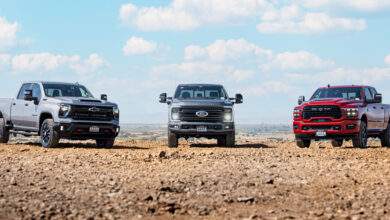
Regardless of whether the car is new or used, Washington drivers should prioritize features that handle our specific terrain. All-wheel drive (AWD) is highly valued in the Pacific Northwest and helps maintain a vehicle’s resale value. You can also review expert pickup truck rankings or SUV evaluations from automotive authorities to see which specific models hold their value best in our region, ensuring that your investment remains stable regardless of which route you choose.
Related Reading: Top Pickup Trucks Built for Washington State Farms 2026
Common Mistakes or Buying Considerations
The most common mistake Washington buyers make is failing to account for the “invisible” costs of used cars, specifically tires and brakes. In our hilly terrain, these components wear out faster than in flatter states. A “deal” on a used SUV can quickly disappear if you have to spend $1,200 on new tires within the first month of ownership.
Another consideration is the financing gap. Because used car interest rates are higher, you may end up paying nearly the same amount of interest over the life of the loan as you would for a slightly more expensive new car with a promotional 0.9% or 1.9% APR.
Frequently Asked Questions
Q: Does Washington have a “Lemon Law” for used cars?
A: Generally, no. Washington’s Lemon Law primarily covers new vehicles and some demonstrator models. Used cars are typically sold “as-is” unless they come with a specific dealer warranty or are still covered by the original manufacturer’s warranty.
Q: Is it cheaper to insure a new car or a used car in Washington?
A: It depends. While used cars have a lower replacement value, which can lower collision coverage costs, new cars often feature advanced safety systems that earn significant discounts. It is best to get a quote from your insurance agent for both options before buying.
Q: How much does depreciation affect new cars in the first year?
A: On average, a new car can lose 15% to 20% of its value the moment it leaves the lot. In 2026, as inventory levels have stabilized, this depreciation has returned to pre-pandemic norms, making the initial “hit” a major factor for those who plan to trade in their car frequently.
For Dealership Insights: Car Marketing: Smart Digital Strategies to Increase Sales
Ready to find your next vehicle? Visit Speck Dealerships today — or browse our inventory online.